I. Overview
Who he is
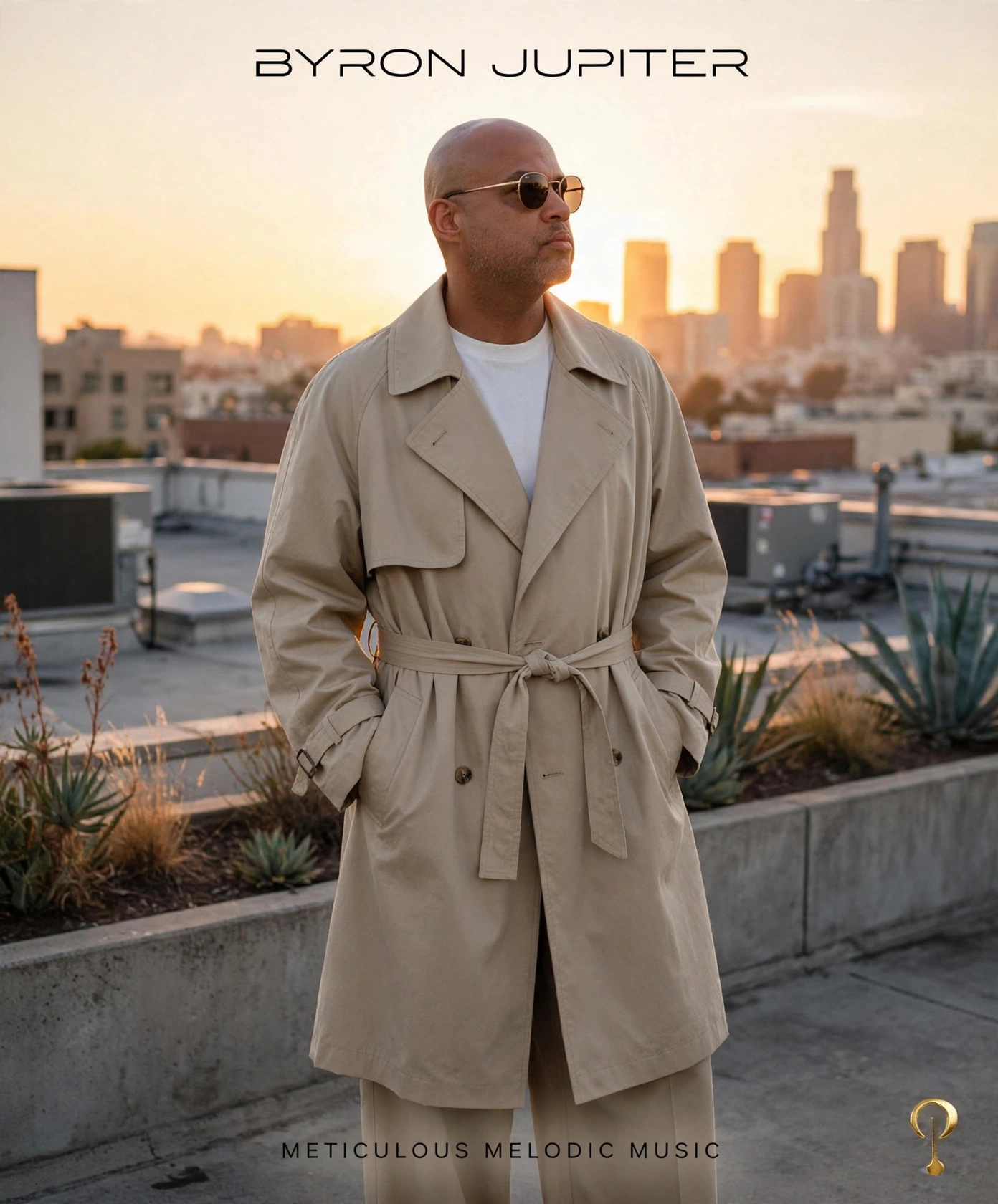
Byron L. Jupiter Jr. is a New Orleans record producer, recording and mix engineer, and cultural archivist. Across four decades at the board he has recorded, mixed, and produced work spanning the city's foundational hip-hop catalog and the contemporary artists shaping its next chapter. He is Executive Director of The Box Studios in New Orleans East, where a 60-channel Neve V3 console was retrofitted under his direction, and principal of Good Delivery (BMI) and BOX STUDIOS (ASCAP). Alongside the studio he maintains the Byron Jupiter Archive: part museum, part academy, part research desk, with formally accessioned collections, structured teaching, and sourced, citable research. His work is grounded in a formative apprenticeship at the family-run Jupiter Exxon service station and at Gerber Pawn Shop, and in mentorship — teaching engineering, ownership, and studio practice to the next generation of New Orleans musicians and technicians.
He is a thinker and a planner as much as an operator: a son, brother, cousin, friend, mentor, and community member whose work has always been about keeping other people's work from disappearing. The credits are the visible part. The habit underneath them — label the tape, log the session, teach the next person in the room — is the career.
II. Early career
Forecourt, pawn counter, first console
Byron's first job was not in a studio. It was at Jupiter Exxon, the family's full-service, Black-owned service station, where every relative who pulled a shift also had another job and a side hustle — his uncle Wilbert spent more hours on that forecourt than anyone. Service work taught the discipline that would later define his sessions: greet the customer, diagnose fast, do the job right the first time, and keep the bay moving.
As a kid he also worked at the historic Gerber Pawn Shop, where value and cultural difference were negotiated across a counter every day. Learning what a thing is worth to the person holding it — and how to treat that person — became the ethic he brought to artists' masters decades later.
His run on the board begins in 1985, years before the Cash Money imprint would carry New Orleans rap nationally. He was already tracking, learning rooms, and building the ear that would record and mix the catalog that defined the city. In 1990 he completed real-estate training at Delgado — contracts, valuation, and ownership — the business literacy that later let him build independent studio infrastructure instead of renting someone else's.
III. Influences
What shaped the ear
Six sources — people, rooms, and a console — that account for how a Byron Jupiter record sounds and why it gets filed the way it does.
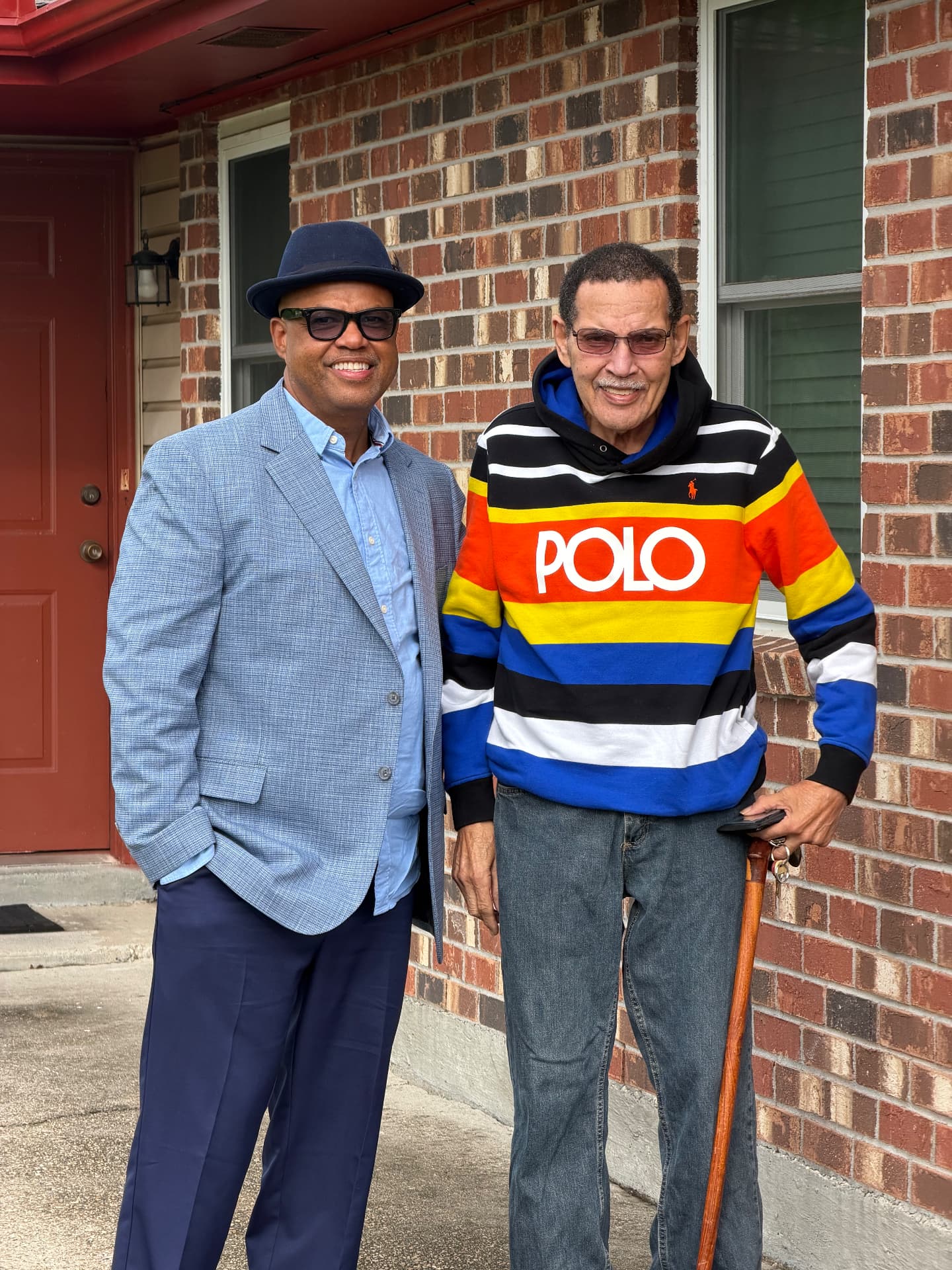
Byron Jupiter Sr.
Father, road manager, first teacher
Road manager, sponsor, and the earliest operator behind the archive. He taught that a career is logistics before it is art: who is in the van, who is paid, what the night costs, what gets written down.
The New Orleans second line
Rhythmic grammar
Brass, bounce, and the parade route taught call-and-response and the way a crowd carries tempo. Every mix Byron builds still leaves room for the street to answer back.
The foundational hip-hop catalog
Studio discipline
Long, high-volume session blocks in the 1990s taught speed without sloppiness — punch, print, label, file — and the value of a take that survives the room it was cut in.
Gospel and church rooms
Ear training
Choirs, live organ, and unforgiving acoustics trained the ear on balance, headroom, and the emotional weight of a vocal placed correctly.
The Neve V3 console
Technical north star
A 60-channel Neve V3 retrofitted under his direction at The Box Studios: analog summing, recall discipline, and the argument that a room is a system, not a pile of gear.
Mentors, students, and the block
Purpose
Engineers he taught, artists he raised, and neighbors who kept the culture alive without credit. Community is the archive — the reason the record is kept at all.
IV. Career timeline
The record, in order
Drawn from the archive's dated timeline, so the biography can never drift from the source record.
1980s
The room finds him
Full-service pumps at Jupiter Exxon, stand-in shifts at Gerber Pawn Shop, and first hours behind a console. Learning that every business is a room with a rhythm — and learning it first from a father who was road manager, sponsor, teacher, and the earliest believer in the work.
1985
The era starts before Cash Money
Byron Jupiter's run on the board begins in 1985 — years before the Cash Money imprint would define a national sound. He is already tracking sessions, learning rooms, and building the ear that would later record and mix the catalog that put New Orleans rap on the map. The era is not borrowed; it is built from the ground up.
1990
Delgado Real Estate Training
Licensed real-estate training at Delgado in 1990. The same mind that would later track a session was first trained to read contracts, value property, and understand ownership as the foundation of independent infrastructure.
1990s
Foundational sessions
Recording and mixing through the era that put New Orleans rap on the national ledger — including Cash Money's earliest catalog work.
1993
Be the One
Produced the record and played synth keyboard bass on “Be the One” — a session with Sir Dean Gant, Nicholas Payton, and Greg, where the low end was played by hand rather than programmed. Cut in 1993; released to streaming in 2017.
2000s
Building the board
Studio ownership, production credits, and the discipline of running rooms as systems: SOPs, session logs, and archives that outlive the release.
2010s
Keeping the record
Archiving tape, metadata, and the people behind the credits. Mentorship becomes part of the job — the worker doers get names.
2020s
Institutional footing
Catalog registry, publishing structure, Voices of Tomorrow, and civic work — turning four decades of sessions into audited, transferable assets.
Aug 30, 2026
Aaniyah In Session — live at Gasa Gasa
Live Nation presents an intimate, personalized sonic invitation: Aaniyah In Session with Mac Infinity and Kai De Lua, 4920 Freret St. A birthday gathering built like a session — invitation serialized, one guest at a time.
Aug 12, 2026
The Academy — curriculum & enrollment
Six tracks across four rooms: production and sampling, engineering and mix, writing and booth, vocal architecture, turntablism, and vibe code with VR. Every track opens with a one-week intensive, closes with a public defense in Atmos 7.1.4, and archives to the Congo Square VR gallery. Over/under cable wrap and a BTU calculation are the entry ticket.
V. Today
Current work
Byron runs sessions at The Box Studios in New Orleans East, mentors the engineers and artists coming up behind him — including the Voices of Tomorrow cohort and Aaniyah Anderson's Aaniyah In Session series — and maintains the Byron Jupiter Archive as an accessioned, publicly readable record with a finding aid, encyclopedia, glossary, and dated research journals.