
Editorial
About this archive
This site is the official reference for the life and work of Byron L. Jupiter Jr. — a New Orleans producer, recording engineer, mix engineer, and archivist. It is authored and maintained by the subject, with editorial support, and is intended as a citable source for press, researchers, curators, and collaborators. Where a traditional archivist manages physical documents in a library or museum, Byron Jupiter functions as a cultural and professional archivist for the New Orleans music industry — actively securing, organizing, and passing on the technical and creative know-how of the city's sound to the next generation.
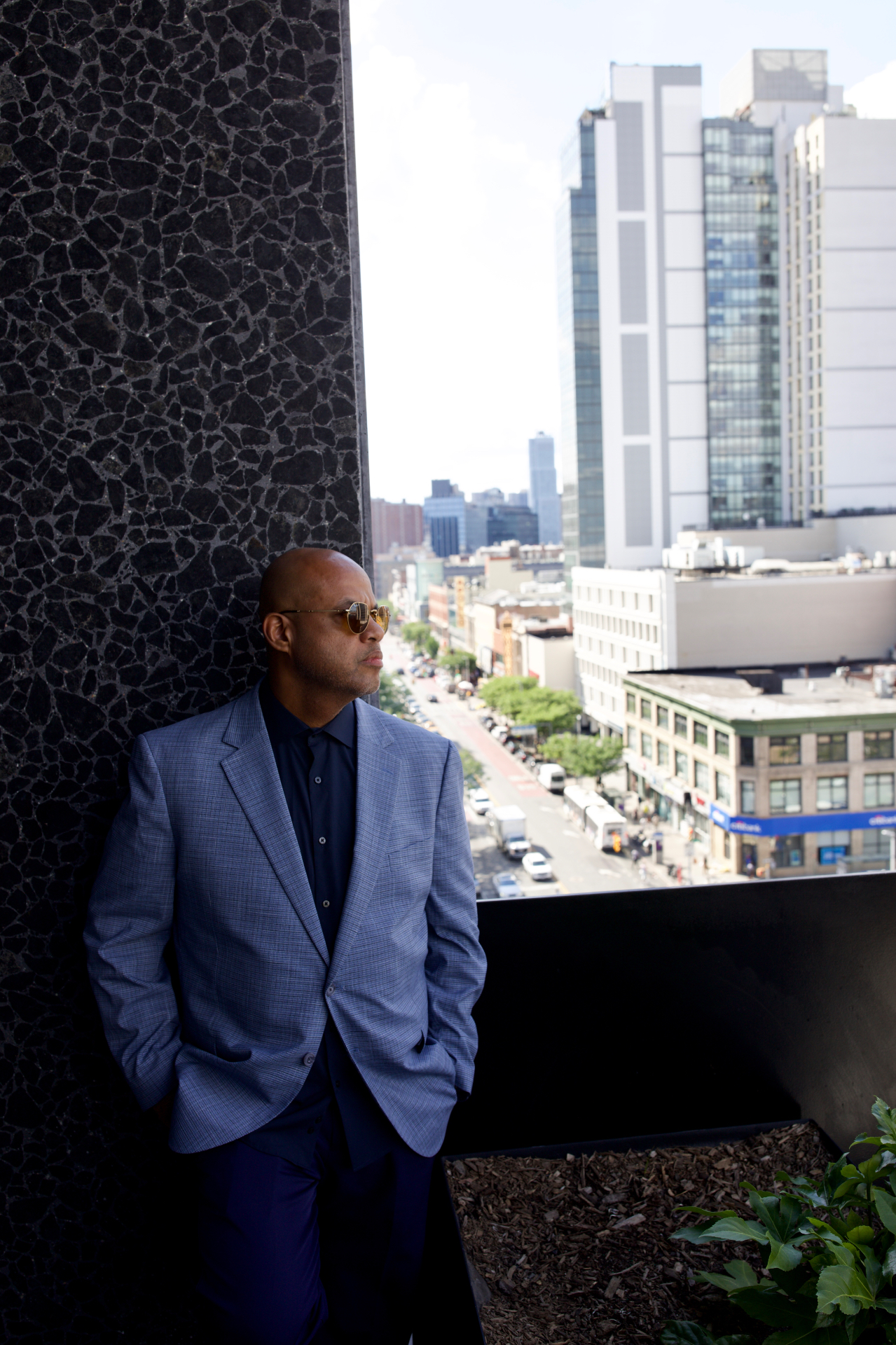
Cultural & professional archivist
Securing the know-how of New Orleans sound.
Musical Legacy
Documenting and preserving the production lineage of New Orleans music — recording, mixing, and producing while keeping a detailed record of sessions, collaborators, hardware, and the room notes that define the city's sound.
Operational Philosophy
Beyond history, the work is treated as an archive of business and creative infrastructure — codifying SOPs for studio work, publishing, and artist development, now franchised through the JUPE Network.
Creative Hub
A portal for Jupiter Music House and The Box Studios, publishing interests, and Voices of Tomorrow — connecting emerging artists to the lineage documented across decades.
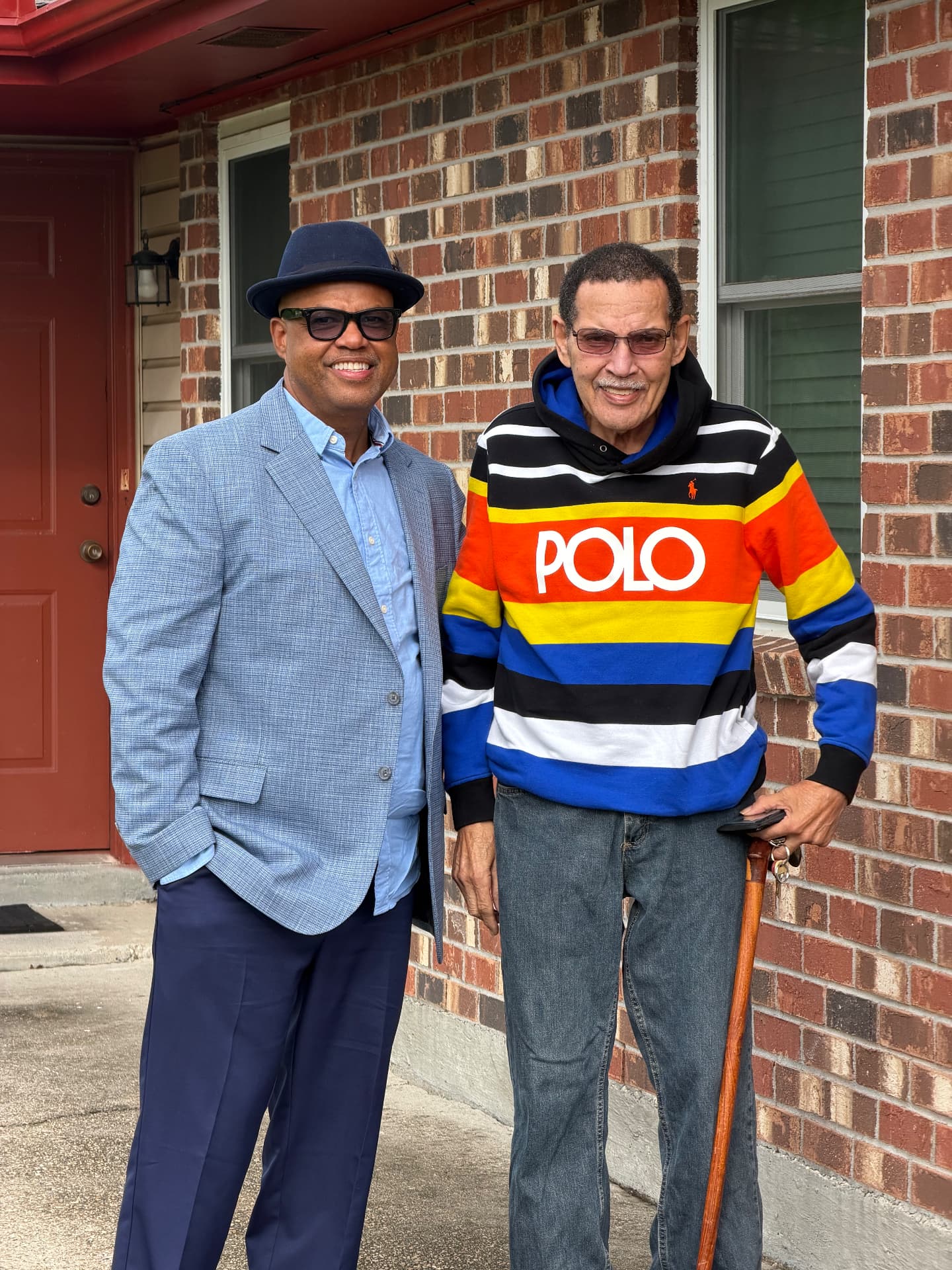
Above: Byron Jupiter Jr. and his father, Byron Sr. — on the right — outside the family home.
Scope
The archive documents Byron Jupiter's four-decade practice: session credits, equipment lineage, mentors and collaborators, cultural context of New Orleans Bounce, R&B, and hip-hop, and long-form journals. Where a page reproduces a work by another artist, credit is given to that artist; the archive claims no rights beyond Byron Jupiter's own contributions.
Education
Byron L. Jupiter Jr. completed licensed real-estate training at Delgado in 1990. The training was not separate from the studio work: it taught the same disciplines that later kept rooms open, catalogs audited, and sessions moving — contracts, ownership, operations, and the long view of running a creative enterprise as a system. The archive is itself a product of that education: organized, citable, and maintained for the next generation.
Editorial standards
- Primary sourcing. Credits are drawn from session notes, invoices, and firsthand recollection by the subject and named collaborators.
- Attribution. Third-party recordings, images, and quotations are attributed to their originators; where a role is disputed or shared, both are named.
- Distinguishing fact from reflection. Long-form journal entries labeled as such are personal recollection, not verified reporting. Discography and technical pages are held to a higher standard.
- Privacy. Home addresses, precise GPS coordinates, and family members' names are redacted unless the individual has publicly self-identified.
- Fiction & speculative work. Pages marked "concept," "proposal," or "speculative" describe unshipped or imagined work and should not be cited as production credits.
Versioning & permanence
Every reference page carries a permanent URL and a "last revised" date. Substantive corrections update that date; typographical fixes do not. Withdrawn pages redirect to a note explaining the withdrawal rather than returning a 404, so citations remain resolvable.
Press & research kit
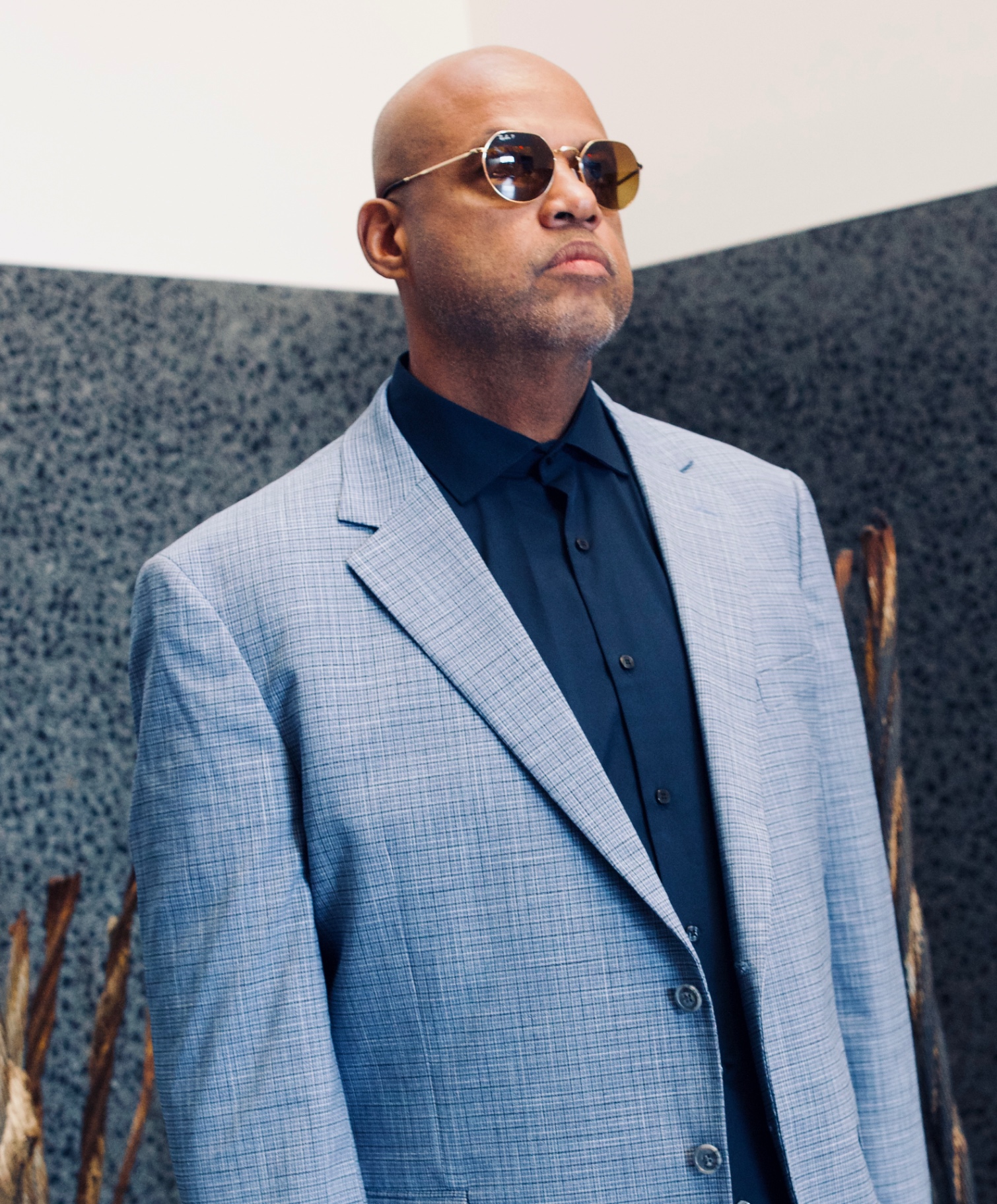
A short factual bio, an approved likeness, and a preferred credit line are available below for editorial use. Please use the bio verbatim or lightly trimmed; do not paraphrase career milestones.
Preferred credit line: Byron Jupiter — Producer / Engineer, New Orleans.
Corrections
If you believe an entry is inaccurate, misattributed, or missing context, write to sales@leasethebox.com with the page URL and the specific claim in question. Verified corrections are applied within 14 days and disclosed on the revised page.
The living manuscript
A companion page, About this site, reports the current state of the archive — how many sections, photographs, timeline events, and research entries it holds, what changed most recently, and which threads remain open. It is derived from the archive's own contents at load time rather than maintained by hand. This page governs; that page reports.
- APAJupiter, Byron L., Jr. (2026). About this archive. The Byron Jupiter Archive. Retrieved September 13, 2026, from https://byronjupiter.com/about-this-archive
- MLAJupiter, Byron L., Jr. "About this archive." The Byron Jupiter Archive, August 18, 2026, https://byronjupiter.com/about-this-archive. Accessed September 13, 2026.
- BibTeX@misc{jupiter_2026_about_this_archive, author = {Jupiter, Byron L., Jr.}, title = {About this archive}, year = {2026}, howpublished = {\url{https://byronjupiter.com/about-this-archive}}, note = {The Byron Jupiter Archive, revised August 18, 2026, accessed September 13, 2026} }
Permanent URL: https://byronjupiter.com/about-this-archive · Last revised August 18, 2026. Entries in this archive are maintained by the author; corrections may be requested through the editorial page.
Cite this unit
@misc{jupiter_about-this-archive_2026,
  author       = {Jupiter, Jr., Byron L.},
  title        = {{About This Archive}},
  howpublished = {The Byron Jupiter Archive, New Orleans, Louisiana},
  institution  = {The Byron Jupiter Archive},
  year         = {2026},
  url          = {https://byronjupiter.com/about-this-archive},
  urldate      = {2026-01-01},
  note         = {Accessed 2026-01-01}
}Citations resolve to the canonical URL for this unit. Corrections are dated and published rather than silently amended, so an access date identifies the exact version you read.