A Fairytale in Ten Chapters

The Crest and the Crown

A city below the sea, a shield in a water oak, a keeper of small hours, and a girl who would not be background. Told with the marks, portraits, and posters of the archive.

Fiction, drawn from real rooms. About a ten-minute read.

Line-engraved shield crest with laurel wreath and the words Meticulous Melodic Music, established 2024.
The oath, cut in line and laurel.

Chapter I

The Shield in the Water Oak

Once, in a city built below the sea, the storms came so often that the people learned to keep nothing they could not carry. Songs were the lightest thing they had, so songs were what they kept — humming them down Lizardi Street, trading them like coins at the corner store.

But songs, when nobody writes them down, drift off with the water. So the elders hung a shield in the branches of a water oak and swore an oath on it: whatever this city sings, someone will keep the record.

The shield bore three words, and the three words were a promise: Meticulous. Melodic. Music.

Studio portrait of Byron Jupiter in a light blue linen blazer and navy shirt against a grey backdrop.
The keeper, between sessions.

Chapter II

The Keeper Who Kept Small Hours

The oath fell to a keeper. He was not a king and never asked to be one. He wore a linen blazer the color of morning and sat very still while other people made noise, which is the rarest talent there is.

The keeper had one gift: he could hear the difference between a sound and the truth underneath it. He would move a microphone the width of a thumbnail and a whole room would suddenly mean what it said.

People called that gift magic. He called it forty years of small hours.

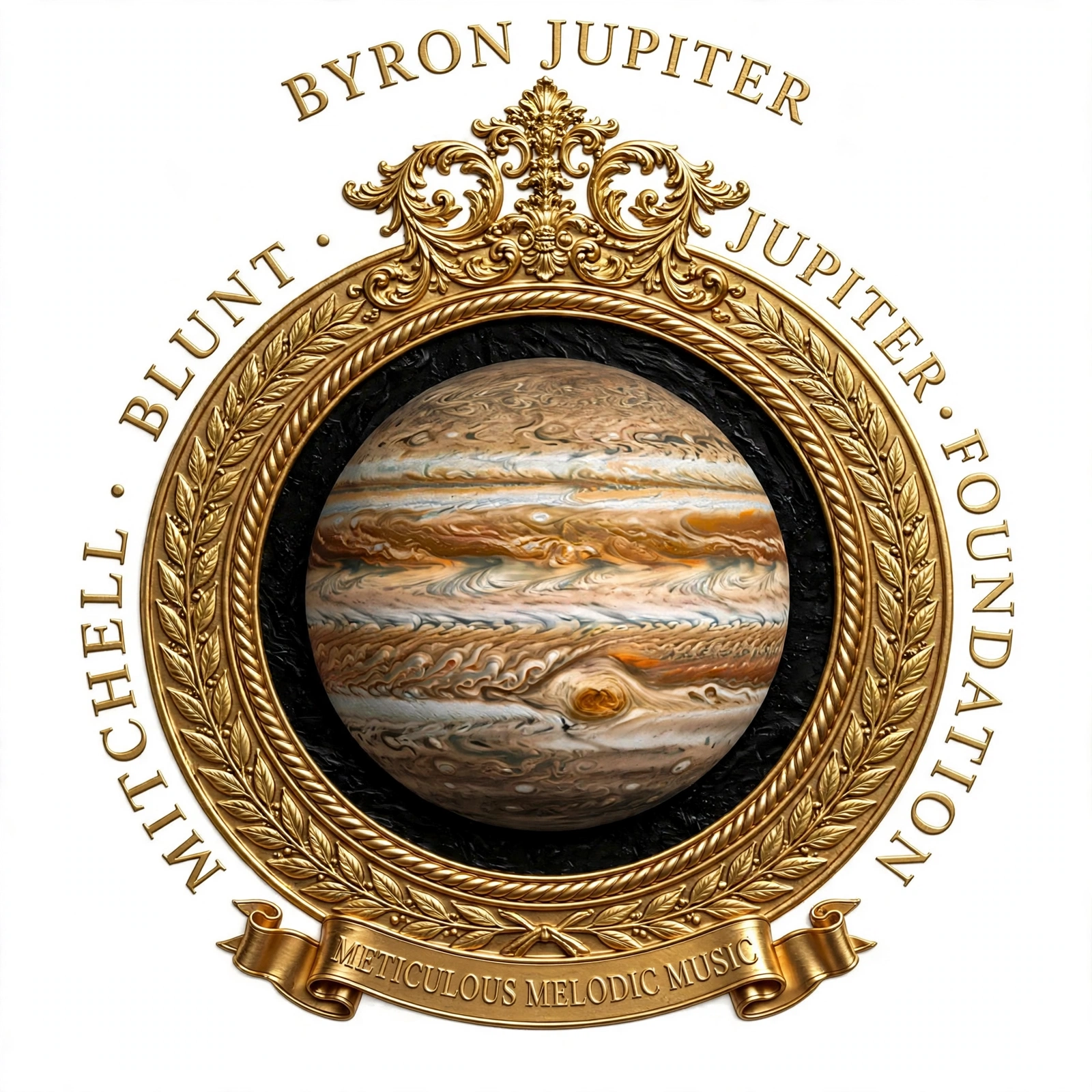
Ornate gold Jupiter Foundation crest with a planet, laurel frame, and a Meticulous Melodic Music banner.
Gold is what a kept promise looks like.

Chapter III

The Crest Turns Gold

Every oath is tested. One year the water came high enough to take the tape off the shelves, and the keeper carried what he could up a stairwell in the dark, one box at a time, until his arms would not close.

When the sun came back, the shield in the water oak had changed. The plain line had gone to gold — not because gold is precious, the elders said, but because gold is what you get when a promise is kept under heat.

From that day the crest was worn, not displayed.

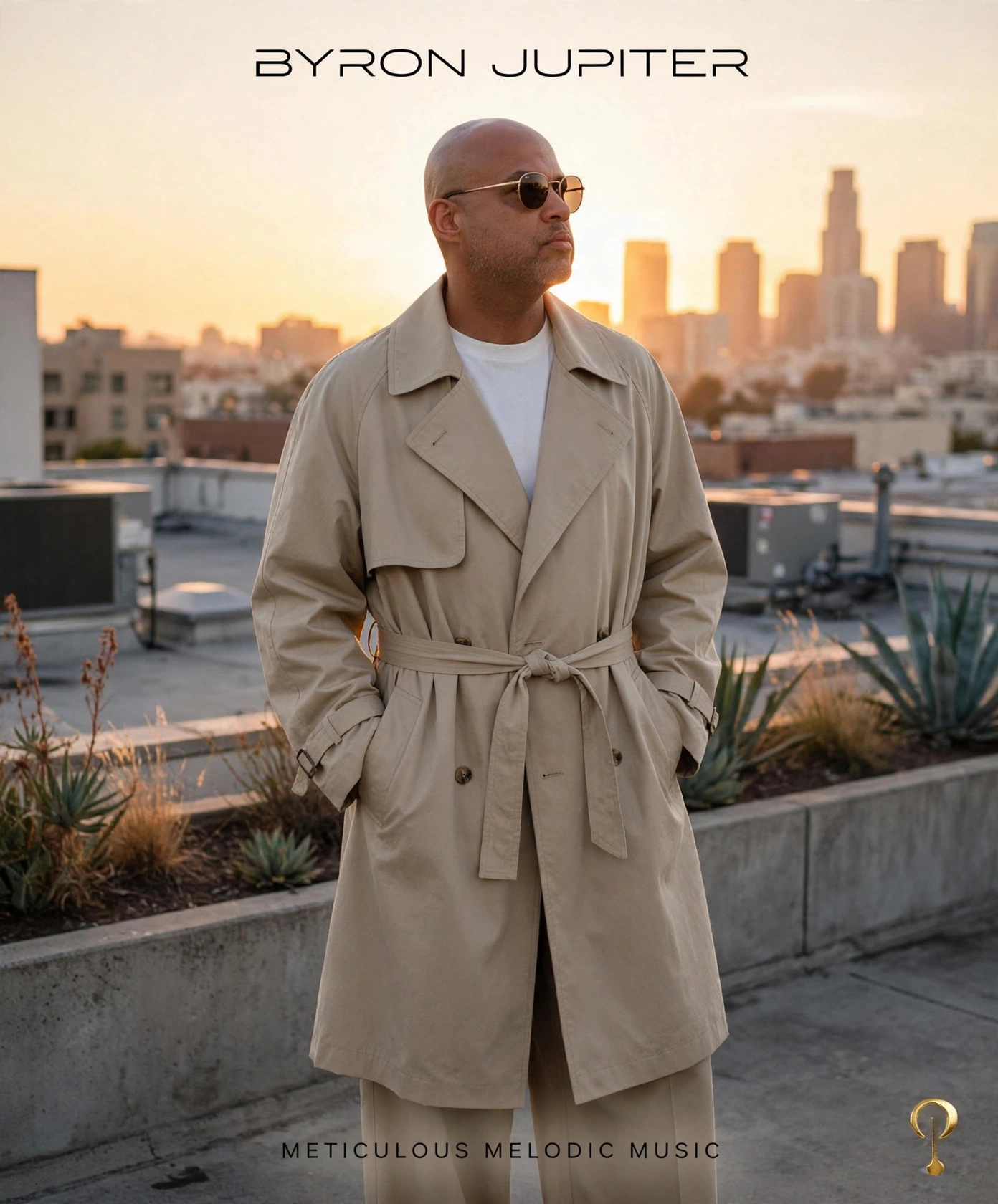
Byron Jupiter in a tan trench coat on a rooftop at golden hour with the city skyline behind him.
Taking attendance from the roof.

Chapter IV

The Rooftop Hour

There is an hour in that city, just before the streetlights decide, when everything is the color of brass. The keeper climbed to the roof at that hour to listen to the whole town at once: a brass band four blocks off, a screen door, a train, a child counting.

He was not writing a song. He was taking attendance.

Whatever answered him from the rooftops, he wrote in the ledger that night, and the ledger never once flattered anybody.

The Meticulous Melodic Music wordmark in outlined magenta lettering.
Three words, in that order.

Chapter V

The Wordmark Spell

Now, the keeper knew a spell, and it was only three words long. Apprentices were always disappointed by this. They wanted incantations.

Meticulous, he told them, means you will do the boring part. Melodic means you will not let the boring part kill the joy. Music means somebody who is not in this room has to feel it.

Say all three, in that order, every day, he said, and you can build anything. Skip one, and the whole thing hums.

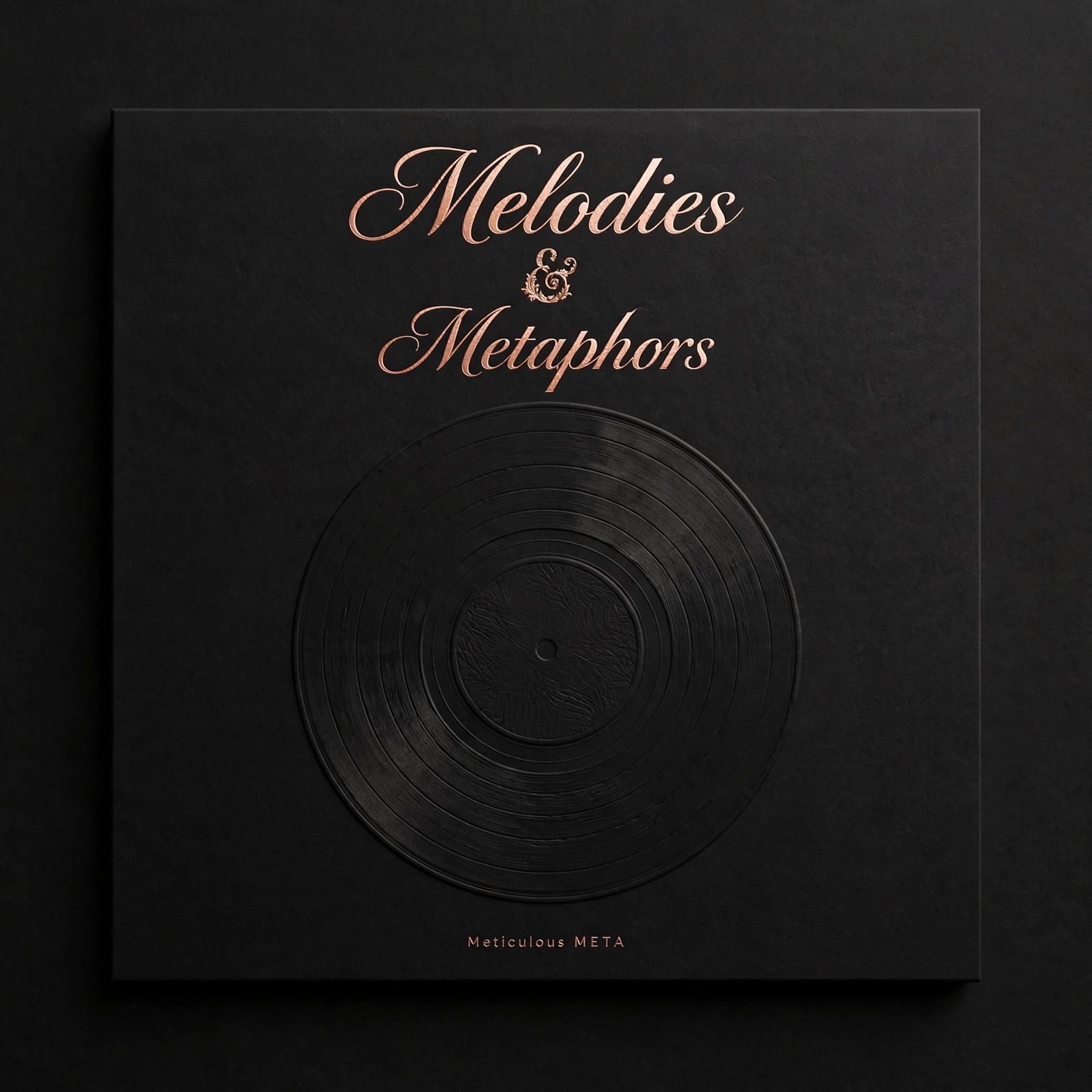
Melodies and Metaphors cover art: rose-gold script on a black embossed sleeve with a debossed vinyl record.
The record that waits you out.

Chapter VI

Melodies and Metaphors

In the vault beneath the studio there was a record no one had ever pressed. It played only for a person willing to sit through the silence in the first groove — a full eight seconds of nothing, which most visitors could not survive.

Those who waited heard their own city played back to them: the parts they were proud of, and the parts they had agreed not to mention.

The record was called Melodies & Metaphors, because the truth in that town was always both.

Warm poster of Aaniyah Anderson holding a wine glass, advertising Aaniyah in Session at Gasa Gasa on August 30.
The invitation goes out.

Chapter VII

The Girl Who Would Not Be Background

Then a girl came to the door with a voice she had not yet been given permission to use. Every room she had sung in had asked her to be softer, prettier, further back.

The keeper set one microphone, said nothing for an hour, and pressed record.

When she heard herself played back at full size, she cried, which is what usually happens the first time somebody is told the truth kindly.

The herald reads the date.

Chapter VIII

The Herald in the Neon Wood

Word travels strangely in a city like that — half by radio, half by cousin. A herald carried the news through the neon wood at the edge of town, where the industry keeps its house and the lights are always the wrong color.

He did not beg them to come. He simply read the date out loud, twice, the way you read a thing that is going to happen whether or not anyone shows up.

They showed up.

Dark neon Aaniyah In Session LIVE industry invitation graphic for a Women In Music 2026 tribute edition.
Gold on a dark field, and everyone named.

Chapter IX

The Night the Industry Was Invited

The invitation was gold on a dark field, and it named every house that had ever taken a song out of that city without leaving a receipt. It did not accuse them. It invited them.

That was the trick of it. You cannot embarrass a kingdom, but you can seat it in the front row and let it hear what it has been living off of.

The girl sang. Nobody in the neon wood checked a phone.

Flat-lay of META and Accession branded goods: cap, laptop sleeve, tote, mentoring journal, keychain, pen, and headphones.
The table he left set.

Chapter X

What the Keeper Left on the Table

The keeper did not leave a castle. He left a table: a cap, a notebook, a tote, a pair of headphones, a pen that worked. Ordinary tools, laid out the way a surgeon lays them out, so the next person would not have to guess.

Beside them he left the ledger, open, with the last line unfinished on purpose.

And that is how the city stopped losing its songs — not by magic, and not by luck, but because somebody kept the record, and then handed over the pen.

Apparatus

Encyclopedia

People, places, and objects of the tale, with the chapters in which they appear.

Water Oak, The

Ch. I · X

The invented tree at the center of the tale, standing at the edge of a city built below the sea. The elders hung the shield in its branches and swore the keeping-oath beneath it. The only wholly fictional object in the story; every other artifact pictured is a real holding of the archive.

Shield, The (Meticulous · Melodic · Music)

Ch. I · III

The crest bearing the three-word oath. It appears twice: first as a plain line engraving with laurel wreath, then transfigured to gold after the flood year. The elders' gloss is that gold is not preciousness but evidence — what a promise looks like once it has been held under heat.

Keeper, The

Ch. II · IV · V · X

The story's protagonist: an engineer, not a king. His single gift is hearing the difference between a sound and the truth beneath it. He is characterized by stillness, thumbnail-width microphone adjustments, and forty years of small hours. He leaves no castle — only a set table and an open ledger.

Ledger, The

Ch. IV · X

The nightly written record of whatever answered from the rooftops. Noted for never once flattering anybody. Its final line is left unfinished on purpose, the story's closing image of succession: the record kept, then the pen handed over.

Rooftop Hour, The

Ch. IV

The brass-colored interval just before the streetlights decide, when the keeper climbs up to hear the whole town at once — a brass band four blocks off, a screen door, a train, a child counting. He describes the practice not as composing but as taking attendance.

Melodies & Metaphors

Ch. VI

The unpressed record in the vault beneath the studio. It plays only for a listener willing to sit through eight seconds of silence in the first groove. Those who wait hear their own city played back: the parts it is proud of and the parts it agreed not to mention.

Girl Who Would Not Be Background, The

Ch. VII · IX

The singer who arrives with a voice she has not yet been given permission to use, having been asked in every prior room to be softer, prettier, further back. One microphone, an hour of silence, and a full-size playback constitute her turning point.

Neon Wood, The

Ch. VIII · IX

The district at the edge of town where the industry keeps its house and the lights are always the wrong color. The herald crosses it carrying the date; the invitation that follows names every house that ever took a song out of the city without leaving a receipt.

Herald, The

Ch. VIII

The messenger who carries word half by radio and half by cousin. His method is refusal to plead: he reads the date aloud, twice, in the manner of a thing that will happen whether or not anyone attends.

Table, The

Ch. X

The inheritance the keeper actually leaves: a cap, a notebook, a tote, headphones, a pen that works — ordinary tools laid out with surgical order so the next person does not have to guess. The story's argument that inheritance is method, not treasure.

Apparatus

Glossary

Terms of craft and idiom as the story uses them.

Attendance, taking
Listening to a place in full rather than composing over it; counting what is present before deciding what to add.
Full-size playback
Playing a performer's own voice back without reduction or apology. In the tale, the moment a singer is told the truth kindly.
Gold, kept-promise
In the elders' usage, not a precious metal but a residue: what a plain oath turns into after it survives heat.
Melodic
Second word of the spell. The refusal to let the boring part kill the joy.
Meticulous
First word of the spell. The willingness to do the boring part, all of it, every time.
Music
Third word of the spell. The requirement that someone who was not in the room has to feel it.
Receipt
Proof that a song leaving a city was paid for — credited, licensed, accounted. Its absence is the charge the gold invitation quietly files.
Silence, first-groove
Eight seconds of nothing pressed at the head of a record, functioning as a test of patience and a gate on meaning.
Small hours
The keeper's term for the discipline others mistake for magic: four decades of unglamorous late work.
Spell, the three-word
Meticulous, Melodic, Music — said in that order, daily. Skip one and the whole thing hums.
Thumbnail, width of a
The unit of the keeper's craft: the smallest move that changes what a room means.
Worn, not displayed
The rule governing the crest after the flood: a mark carried in practice rather than mounted on a wall.

Apparatus

Index

Every chapter, entry, and term in one alphabetical list.

The ledger is still open.

Every image in this story is a real asset from the archive. The rooms, the marks, and the night at Gasa Gasa all exist; only the water oak is invented.

Cite this unit

@misc{jupiter_the-crest-and-the-crown_2026,
  author       = {Jupiter, Jr., Byron L.},
  title        = {{The Crest and the Crown}},
  howpublished = {The Byron Jupiter Archive, New Orleans, Louisiana},
  institution  = {The Byron Jupiter Archive},
  year         = {2026},
  url          = {https://byronjupiter.com/the-crest-and-the-crown},
  urldate      = {2026-01-01},
  note         = {Accessed 2026-01-01}
}

Citations resolve to the canonical URL for this unit. Corrections are dated and published rather than silently amended, so an access date identifies the exact version you read.